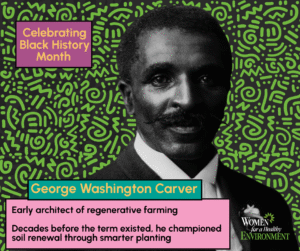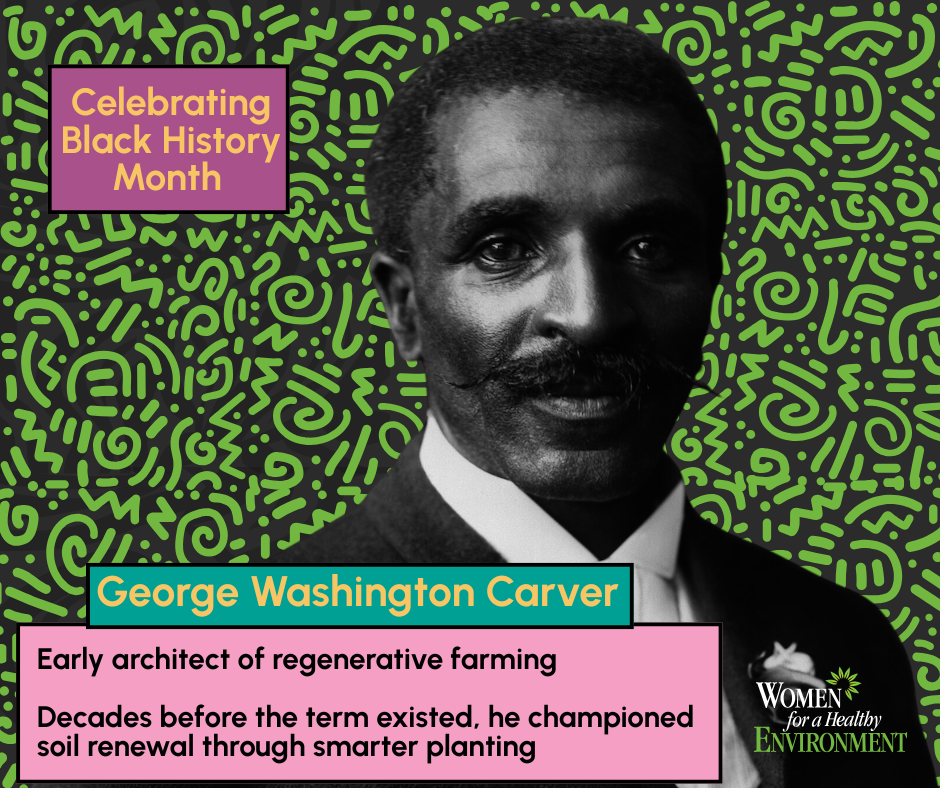
George Washington Carver, considered the early architect of regenerative farming, helped shift Southern agriculture away from practices that exhausted land and trapped many farmers in fragile economies. His work connected soil health to long-term community well-being—an idea that sits at the heart of today’s regenerative and conservation-minded farming.
Carver spent most of his career at Tuskegee Institute, where he led agricultural teaching and research for decades. His focus was practical: how do you restore worn-out soil, protect it from erosion, and help farmers succeed without relying on expensive inputs? He promoted crop rotation and diversified planting, especially using legumes that support soil fertility, because cotton monoculture was stripping nutrients from the ground and leaving farms vulnerable.
Just as important was how he shared knowledge. Carver published a wide run of agricultural bulletins aimed at everyday farmers, not academic audiences. The USDA’s National Agricultural Library notes that these bulletins emphasized soil improvement and techniques like crop rotation, deep plowing, terracing, and fertilizing—written with small-scale farmers in mind. Tuskegee’s archives preserve this bulletin series, underscoring how central public education was to his approach.
Carver also encouraged farmers to plant peanuts and sweet potatoes, both to rebuild soil and to widen options for food and income. His work on new products helped reshape the Southern agricultural economy, while reducing reliance on environmentally destructive cotton dependence. In other words, he wasn’t simply promoting “alternative crops.” He was advocating for a more resilient system: healthier soil, more diverse harvests, and fewer single-point failures.