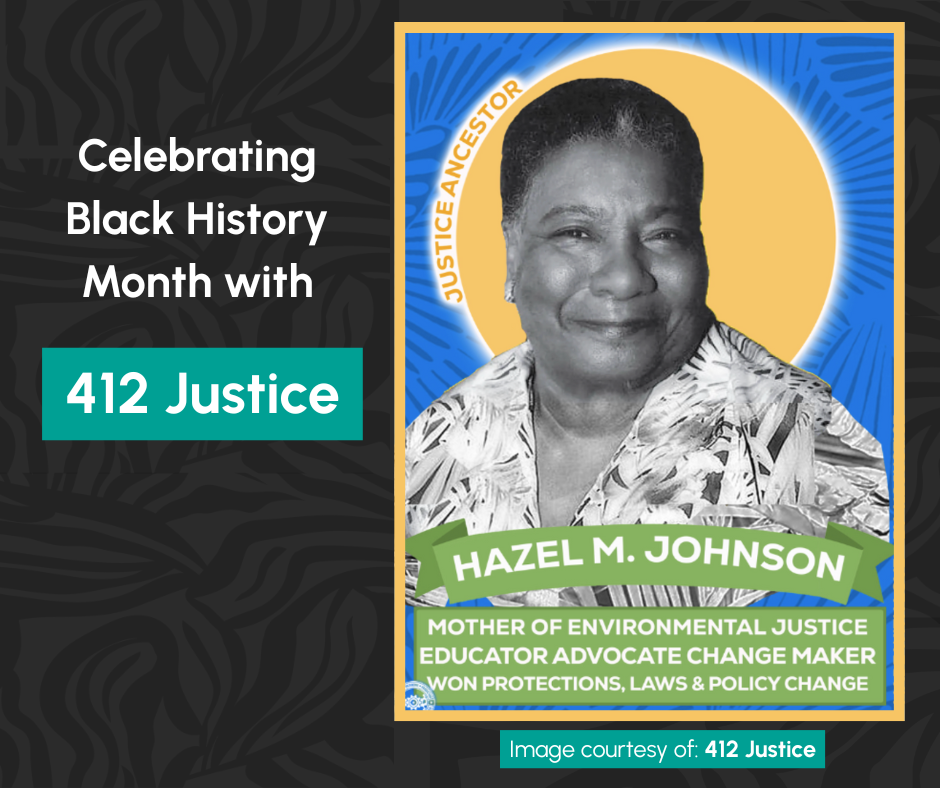
Born in Louisiana in 1935, Hazel M. Johnson was the eldest of four children, though none of her siblings made it to their first birthday. Hazel was orphaned by 12. After marrying and starting a family Hazel moved to Chicago. Her neighborhood, Altgeld Gardens, was surrounded by landfills, industry and sewage treatment plants. Though originally built for veterans, only those with no other options but to live in public housing lived in the neighborhood, a majority of which were people of color.
Hazel’s husband died at 41 of lung cancer, of which he had few risk factors. All of Hazel’s seven children had skin or respiratory issues, and she noticed her neighbors had high rates of miscarriages, children with birth defects, cancer, and respiratory diseases. This, combined with her early life experience, influenced her to begin documenting the chronic health issues in her neighborhood and connecting it to the ring of industrial facilities, landfills, and sewage treatment plants that were contaminating the air and water. Her community was found to have the highest cancer rates in Chicago.
Hazel fought the Chicago Housing Authority for their neglect to maintain buildings and continually ignoring environmental hazards. She founded People for Community Recovery, an organization promoting reform for environmental justice and to fight environmental racism. Through her activism people began to learn of the disproportionate impact environmental hazards have on disenfranchised people, frequently people of color. Her grassroots work ultimately lead to President Clinton signing Executive Order 12898: Federal Actions to Address Environmental Justice in Minority Populations and Low-Income Populations. She empowered and mentored many, including President Barack Obama, to speak up and out about these injustices. Her legacy carries on through focused efforts to clean, restore, and prevent health inequities in Environmental Justice areas today.
To learn more about Justice Ancestors and Environmental Justice activism in Pittsburgh, visit 412 Justice.