At Women for a Healthy Environment, we celebrate Women’s History Month every day. Our organization was built by women environmental health advocates who understood they had to stand up, take charge, and create change. They knew their activism could shape a healthier tomorrow for all—no matter their zip code.
Zip code matters because many communities still live with the consequences of environmental harms rooted in redlining, the discriminatory practice that denied financial services to minority neighborhoods. Those same neighborhoods now face disproportionate exposure to industrial pollutants—from factories to fracking pads—resulting in long-term health impacts.
The women who founded and inspired our work said enough. They used science, organizing, and the power of people to demand action. Their courage sparked a movement that continues to grow, and today we pause to honor a few of the many women whose leadership shaped our mission. [Explore our programs to see how this legacy lives on.]
Women Environmental Health Advocates Who Came Before Us
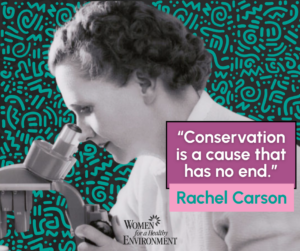
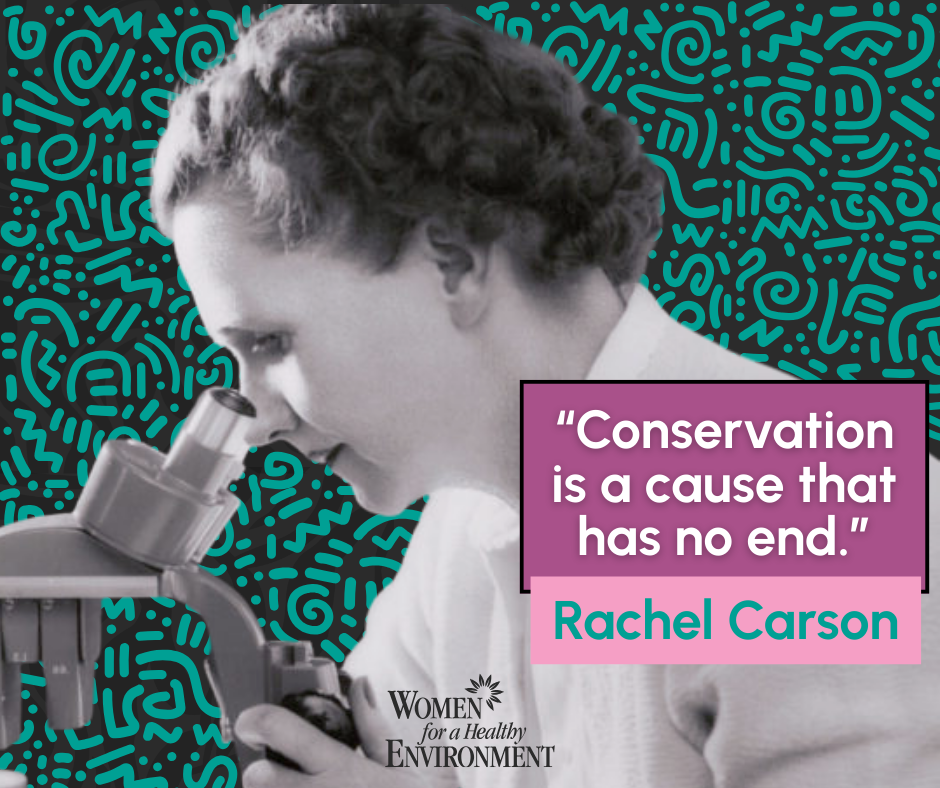
Rachel Carson, who grew up in Springdale just miles from WHE’s offices, is widely credited with igniting the modern environmental movement. She recognized that pesticides were harming people and the planet, and she set out to prove it. Her groundbreaking work led to the ban of DDT. Through scientific rigor and lyrical storytelling, she made communities safer and awakened the public to environmental dangers. Her legacy is especially poignant today as her hometown faces the proposed development of a data center and the environmental risks that accompany it. Among her many powerful words, one line from Silent Spring continues to guide us: “The other fork in the road—the one less traveled by—offers our last, our only chance to reach a destination that assures the preservation of the earth.”
Hazel Johnson, known as the mother of environmental justice, transformed the fight for fair treatment and meaningful involvement of all people in environmental policy. Her Chicago community, Altgeld Gardens, suffered the region’s highest cancer rates due to nearby industrial hazards, polluted waterways, and toxic waste sites. She refused to accept these injustices. Speaking at the first National People of Color Environmental Leadership Summit, she helped craft the 17 Principles of Environmental Justice—guiding values that continue to shape the movement. Her mission was clear: confront environmental harms and mentor the next generation of advocates. Her legacy lives on through organizations like People for Community Recovery, which continue her work today.
Pittsburgh’s Own Environmental Health Legacy
Theresa Heinz has long been a champion for environmental health and women’s wellbeing. Her vision led to the creation of Women for a Healthy Environment. In 2007, she brought the Women’s Health and the Environment Conference to Pittsburgh, where more than 2,000 women gathered to learn about the connections between women’s health and environmental exposures. Through science, policy, and storytelling, the conference introduced the region to topics like endocrine disrupting chemicals – substances that mimic or interfere with natural hormones, especially during vulnerable life stages such as pregnancy, prepubescence, perimenopause, and menopause.
Mrs. Heinz has consistently recognized the intersections of racial, social, and environmental injustices and has worked to uplift the communities most affected. When she spoke in October 2025, her message resonated deeply:
“Around the country there is a family of people with huge ideals who want to contribute and organize the hell out of anybody… What you give is precious. Make people feel liberated and confident.”
Building the Next Generation of Environmental Health Advocates
We also honor WHE’s board chairs, past and present—Ann McGuinn and Tracey Conti, MD. For more than 15 years, these two fearless leaders have guided our organization with distinct yet complementary strengths. Dr. Conti brings a medical and public health lens; Ann brings powerful advocacy and community-building skills. Under their leadership, WHE has grown from a staff of one to more than a dozen.
We have reached over 35,000 people through public outreach, supported more than 300 schools and early learning centers, provided healthy home assessments to over 200 households, and delivered environmental education to hundreds of youth. Their leadership has helped cultivate the next generation of environmental advocates and ensured that our mission continues to expand.
15 Years of Environmental Health Advocacy
Last year, WHE celebrated 15 years of impact. Every milestone is a testament to the women who came before us—their dedication, their passion, and their refusal to accept anything less than a healthier, more just world. We are honored to stand on their shoulders, and because of them, our future is limitless.